
Managing an exhibition booth is more than just creative design and quality construction, it’s a complex collaboration between teams, materials, schedules, and on-site execution. This is where workflow coordination becomes the backbone of a successful exhibition project. Without clear coordination, even the most ambitious booth concepts can face delays, cost overruns, and disappointing results.
In this article, we break down why workflow coordination matters and how it ensures your exhibition project runs smoothly from concept to show day.
1. Creates a Seamless Process From Start to Finish
Every exhibition booth project goes through multiple stages, briefing, design, revisions, fabrication, logistics, build-up, and breakdown.
When these stages don’t align, you risk:
- design errors that affect construction,
- rushed production timelines,
- miscommunication with vendors,
- last-minute changes that increase cost.
A coordinated workflow keeps every team informed, aligned, and moving in sync. This prevents bottlenecks and ensures each step transitions smoothly into the next.
2. Improves Communication Across All Teams
Exhibition projects often involve designers, contractors, printing vendors, electricians, fabricators, and onsite crew. Without structured communication, details get lost.
Strong workflow coordination ensures:
- updates are distributed to all parties,
- tasks are assigned clearly,
- revisions are tracked properly,
- questions are resolved quickly.
This reduces misunderstandings and ensures the final outcome matches the original plan.
3. Reduces Errors and Rework Costs
Poor coordination is one of the biggest causes of errors. A design might not match the available space, materials may arrive late, or contractors may fabricate incorrect dimensions.
When workflows are controlled, teams can:
- review plans early,
- confirm measurements,
- cross-check technical specs,
- detect conflicts before production begins.
This cuts down on rework, which saves both time and budget.
4. Ensures Timely Delivery—Critical for Exhibition Deadlines
Exhibition schedules are fixed. There’s no flexibility, you must finish before the show opens.
Workflow coordination ensures:
- production follows a strict schedule,
- logistics are planned well in advance,
- installation teams know exactly when to arrive,
- contingencies are prepared in case of delays.
When time is limited, coordination becomes the key to meeting deadlines without compromising quality.
5. Improves On-Site Efficiency During Installation
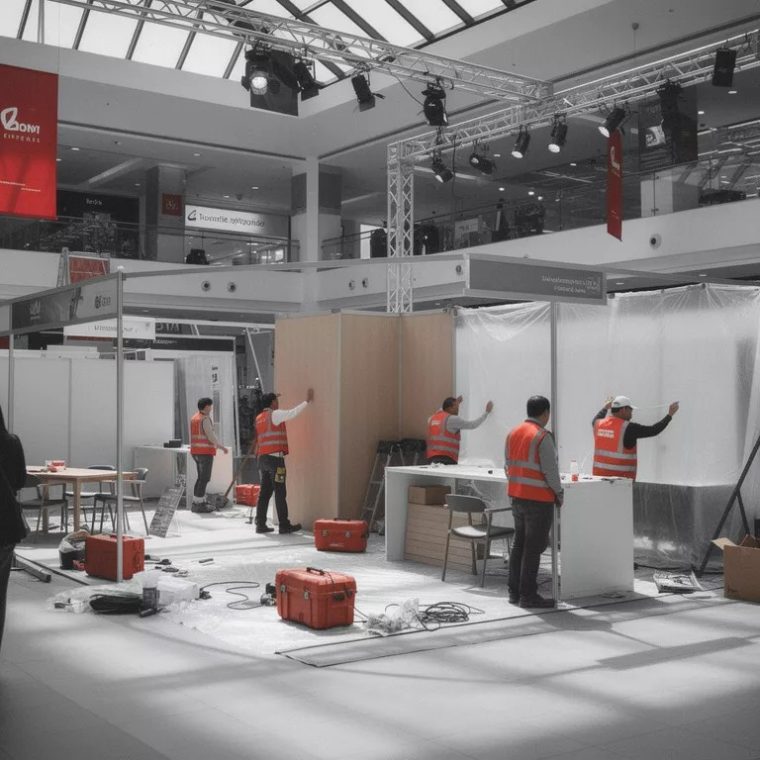
The installation phase is where everything comes together. A well-coordinated workflow means:
- materials are labeled and organized,
- technicians know their sequence of tasks,
- electrical and structural elements fit perfectly,
- the booth can be assembled predictably and safely.
This reduces stress and helps teams solve problems quickly if unexpected issues appear.
6. Enhances Overall Project Quality
Good coordination doesn’t just affect timelines, it elevates the final result.
Projects with strong workflows often have:
- precise finishing,
- consistent branding,
- better structural integrity,
- more polished visual presentation.
Everything simply looks and functions better when the workflow is handled professionally.
7. Strengthens Client Confidence and Satisfaction
Clients might not see every behind-the-scenes process, but they feel the results.
When workflow coordination is strong:
- progress updates are regular,
- expectations are managed clearly,
- deliverables match the proposal,
- the booth is ready on time with minimal friction.
This builds trust and increases the chance of long-term partnerships.
Conclusion
Workflow coordination is not just an internal process, it’s the foundation that determines whether an exhibition project succeeds. From preventing delays to ensuring quality, good coordination keeps teams aligned and allows your booth to be delivered exactly as planned.
Exhibitors who choose contractors with strong workflow management gain peace of mind and better results at every event. A well-coordinated project isn’t just efficient, it creates a stronger impact on the exhibition floor.